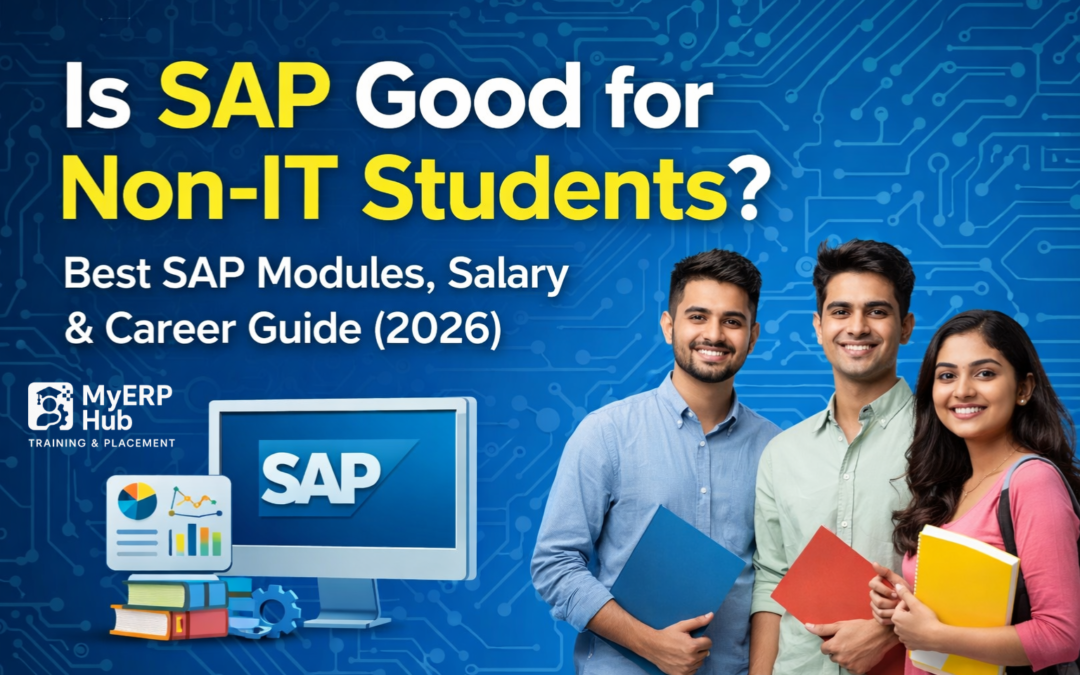
Many students wonder if SAP for non-IT students is a good career option. Students from BCom, BBA, MBA, BA, and other non-technical backgrounds often want to enter the IT industry but worry about coding requirements.
The good news is yes — SAP is one of the best career options for non-IT students who want to enter the IT industry without learning programming.
SAP offers several functional modules that focus on business processes rather than coding. Because of this, students who understand finance, sales, procurement, and HR processes can easily build a successful career in SAP.
In this guide, we will explain:
- Whether non-IT students can learn SAP
- The best SAP modules for non-technical backgrounds
- SAP consultant salary in India
- How to start a career in SAP
What Is SAP?
SAP stands for Systems, Applications, and Products in Data Processing. It is one of the world’s most widely used ERP (Enterprise Resource Planning) software systems.
SAP helps companies manage important business operations such as:
- Financial management
- Supply chain operations
- Procurement
- Sales and distribution
- Human resource management
Many large companies around the world rely on SAP to manage their business processes efficiently.
Because of this, there is high demand for skilled SAP consultants across industries.
Can Non-IT Students Learn SAP?
Yes, non-IT students can easily learn SAP.
Unlike software development careers that require coding skills, many SAP modules focus on business processes and system configuration rather than programming.
Students from backgrounds such as:
- BCom
- BBA
- MBA
- BA
- BSc
can build successful careers in SAP by choosing the right module.
SAP training programs usually include:
- Business process understanding
- SAP system configuration
- Real-time project scenarios
- Interview preparation
For most SAP functional modules, programming knowledge is not required.
Best SAP Modules for Non-IT Students
SAP FICO (Financial Accounting and Controlling)
SAP FICO is one of the most popular SAP modules for students with finance or commerce backgrounds.
This module focuses on:
- Financial accounting
- Cost controlling
- Financial reporting
- Asset accounting
Students with BCom, MCom, or MBA Finance backgrounds often choose SAP FICO.
SAP MM (Materials Management)
SAP MM focuses on procurement and supply chain management.
Key topics include:
- Vendor management
- Purchase orders
- Inventory management
- Material valuation
This module is ideal for students interested in logistics and supply chain operations.
SAP SD (Sales and Distribution)
SAP SD focuses on managing the sales process within organizations.
Topics covered include:
- Sales order processing
- Billing and invoicing
- Customer management
- Sales reporting
Students interested in sales operations and business management often choose SAP SD.
SAP HCM (Human Capital Management)
SAP HCM focuses on human resource management processes.
This module covers:
- Payroll management
- Employee administration
- HR reporting
Students with HR or management backgrounds often choose SAP HCM.SAP Consultant Salary in India
SAP consultants earn competitive salaries compared to many other entry-level IT careers.
| Experience Level | Average Salary in India |
|---|---|
| Freshers | ₹3 LPA – ₹5 LPA |
| 2–4 Years Experience | ₹6 LPA – ₹12 LPA |
| 5+ Years Experience | ₹15 LPA – ₹30 LPA |
With experience and certifications, SAP consultants can work with top consulting companies and multinational organizations.
Advantages of Learning SAP for Non-IT Students
No Coding Required
Most SAP functional modules focus on business processes rather than programming.
High Job Demand
Thousands of companies worldwide use SAP systems, creating strong demand for trained SAP professionals.
Global Career Opportunities
SAP professionals often work with international companies and global projects.
Strong Career Growth
SAP consultants can grow into roles such as:
- SAP Functional Consultant
- SAP Business Analyst
- SAP Solution Architect
- SAP Project Manager
How to Start a Career in SAP
If you are a non-IT student and want to build a career in SAP, follow these steps:
- Choose the right SAP module based on your educational background.
- Join a professional SAP training program.
- Learn real-time SAP project scenarios.
- Prepare for SAP interviews.
- Apply for entry-level SAP consultant roles.
With proper training and practical exposure, non-IT students can successfully enter the SAP job market.
Conclusion
SAP offers excellent career opportunities for non-IT students who want to enter the IT industry without learning programming.
By choosing the right SAP module and gaining proper training, students from commerce, management, and business backgrounds can build successful careers as SAP consultants.
With increasing demand for ERP professionals, SAP continues to be one of the most promising career paths in the IT industry.